Navigating Modern Suffering Risks in a Vulnerable Society
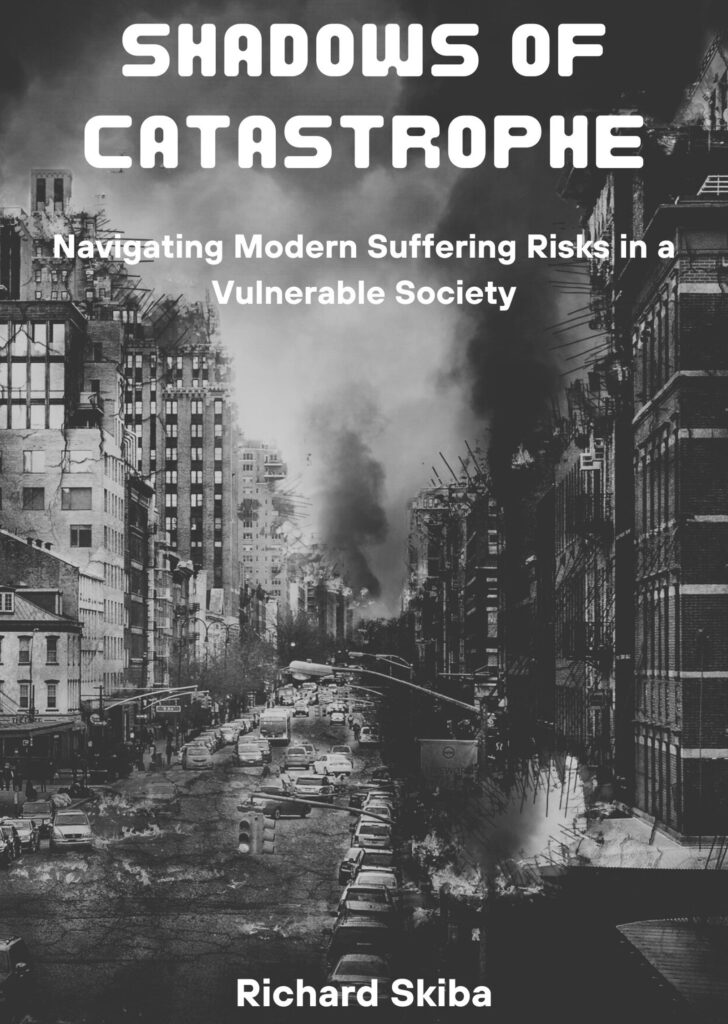






Size: 6.00 x 9.00 in
Pages: 343

This book explores the concept of S-Risks, or suffering risks, and delves into their significance, distinguishing them from conspiracy theories and alarmism. It categorizes S-Risks into agential, natural, and incidental types, discussing the disjunctive nature and various factors influencing them. Examining technological progress, the existence of powerful agents, and unintended consequences, the book addresses societal values, ethical considerations, and specific risks like COVID-19, gain-of-function research, computer hacking, and social media impact. It thoroughly covers AI-related S-Risks, existential risks, misincentives, goal misalignment, adversarial AI, autonomous weapons, economic disruptions, surveillance, and privacy concerns. Additionally, it explores S-Risks associated with climate change, energy, activism, natural disasters, biological engineering, quantum technological outcomes, cosmic phenomena, social and economic experiments, cultural or memetic risks, and global consciousness networks. The book concludes by proposing a classification system for S-Risks and grouping S-Risk profiles.
Book contents include:
Chapter 1 - Introducing S-Risks; Defining S-Risk; Importance of Thinking about and addressing S-Risks; Distinct form Conspiracy Theories and Alarmism; Chapter 2 - Types of S-Risks; Incidental S-Risks; Agential S-Risks; Natural S-Risks; Known, Unknown, Influenceable and Non-Influenceable S-Risks; Chapter 3 - Likelihood of S-Risks; Disjunctive Nature of S-Risks; Technological Progress; Existence of Powerful Agents; Unintended Consequences; Societal Values and Ethical Considerations; Unknown and Unreachable Factors; Chapter 4 – Some Specific Incidental and Agential S-Risks; COVID-19; Gain of Function Research; Computer Hacking; Social Media; Chapter 5 - S-Risks Associated with Artificial Intelligence; AI S-Risks; Existential Risks; Misincentives and Goal Misalignment; Adversarial AI; Autonomous Weapons; Economic Disruptions; Surveillance and Privacy Concerns; Superintelligent AI; Other AI Associated S-Risks; Chapter 6 - Some Natural S-Risks ; S-Risks and Climate Change; Energy; Activism; Natural Disaster; Chapter 7 – Less Often Considered S-Risks; Biological Engineering and Ecological Unintended Consequences; Quantum Technological Outcomes; Interactions with Cosmic Phenomena; Social and Economic Experiments; Cultural or Memetic Risks; Global Consciousness Networks; Likelihood of Less Often Considered S-Risks; Chapter 8 - Mitigating S-Risks; Narrow Interventions; Broad Interventions; Chapter 9 - S-Risk Classification System; The S-Risk Classification System; Grouping S-Risk Profiles; Chapter 10 - Closing Remarks; Index; References